Vinh Long Terracotta Pottery: Iron-Rich Clay Meets Geometric Form
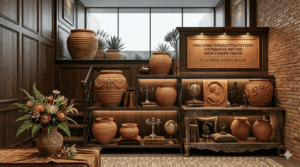
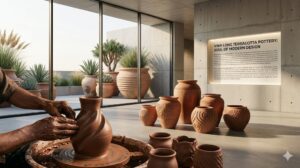
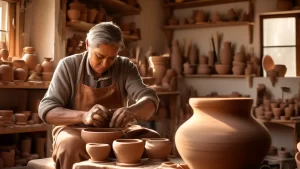
Vinh Long Terracotta Pottery stands at a rare intersection — ancient Mekong Delta geology and sharp contemporary geometry. The alluvial clay here carries elevated iron-oxide content, producing the warm burnt-sienna hue that no synthetic pigment replicates. Artisans in Vinh Long province have worked this earth for generations. Now, a new design language is reshaping what the traditional red vase can become.
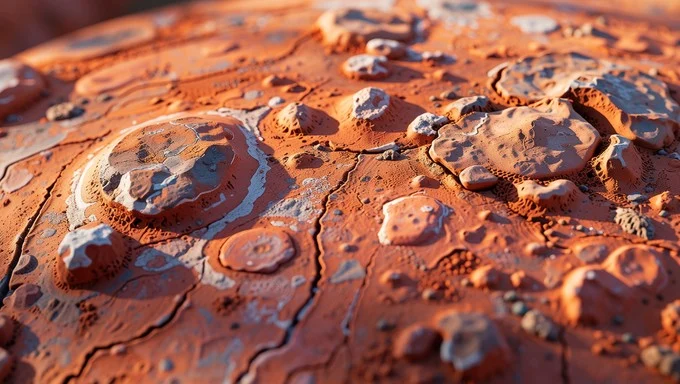
The Mekong deposits fine-grained, mineral-dense sediment annually along the riverbanks of Vinh Long. That iron richness is not cosmetic. It determines structural density, firing behaviour, and the final surface character. Furthermore, it gives every piece a geological fingerprint — a direct record of the delta itself locked inside the vessel wall.
1. Firing Technique and the Science of Unglazed Surfaces
Traditional kilns fire Vinh Long terracotta between 900°C and 1050°C. That range is deliberate. Below 900°C, the clay remains too porous for structural integrity. Above 1050°C, the iron compounds begin to shift colour toward brown-grey, losing the signature red. Artisans therefore control temperature through fuel load, airflow, and kiln placement — not digital sensors. This is craft knowledge, accumulated over decades. To understand how this practice connects to global terracotta art history, the continuity is remarkable: low-fire, unglazed earthenware has anchored human material culture across every continent.
Unglazed surfaces do more than look raw. They breathe. Microscopic pores regulate moisture, keeping cut flowers hydrated longer and maintaining cooler water temperatures inside a vase. Moreover, the natural texture holds ambient light differently across the day — matte at noon, warmly luminous at dusk. Geometric forms amplify this effect dramatically. A flat faceted plane catches light at a hard angle. A cylindrical curve diffuses it. The interplay becomes the aesthetic.
1.1 Applying Geometry Without Erasing Heritage
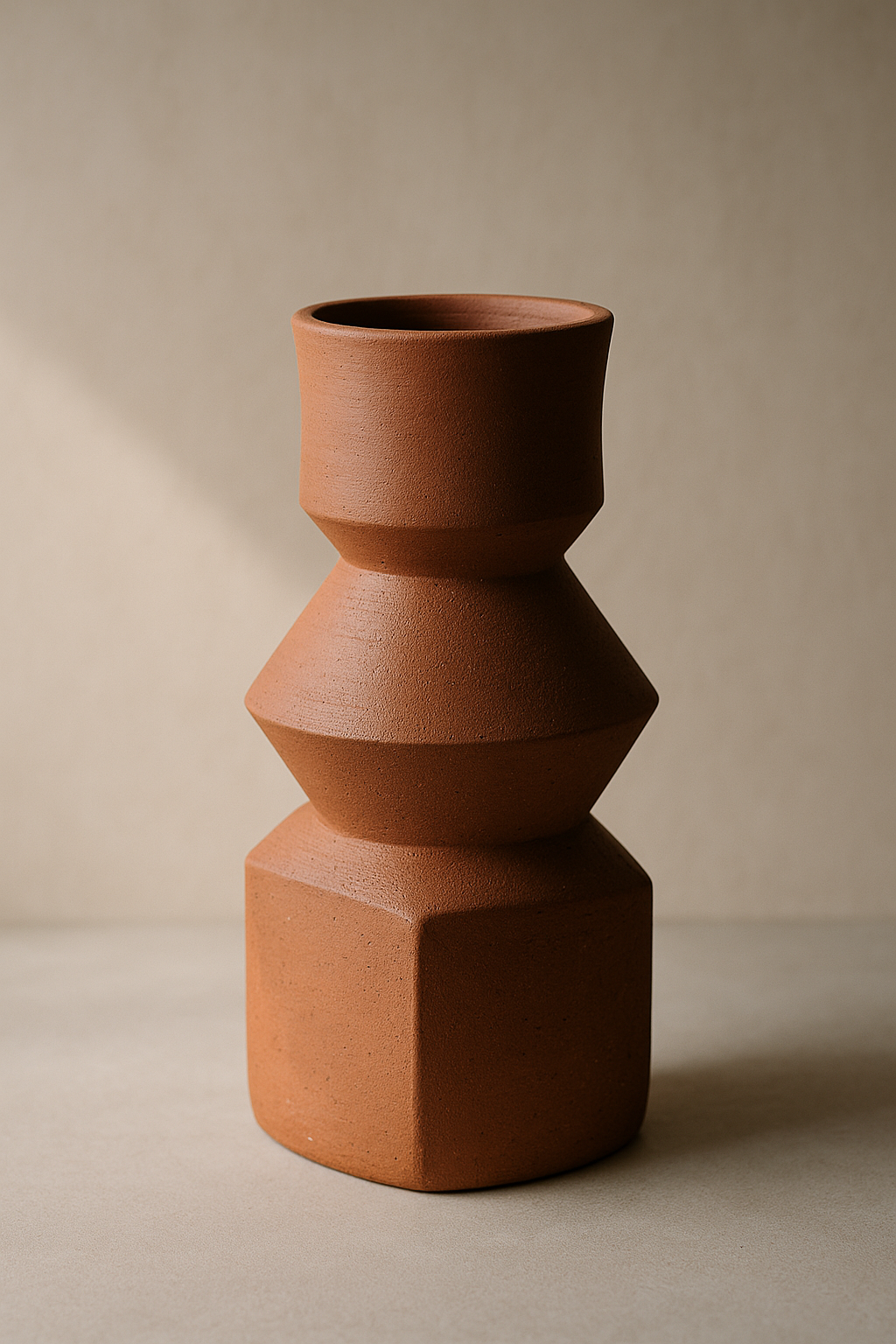
Modern geometric intervention requires restraint. Hexagonal cross-sections, tapered rectangular silhouettes, and angular shoulder cuts all integrate cleanly into the traditional red vase format — provided the proportions respect the original throwing ratios. However, forcing sharp orthogonal lines onto an inherently wheel-thrown form creates visual conflict. The strongest contemporary pieces solve this by combining hand-building and wheel work: the base thrown, the upper body faceted with a wire tool while leather-hard. As a result, the geometry reads as intentional, not imposed.
2. Vinh Long Terracotta in Contemporary Japandi and Wabi-Sabi Interiors
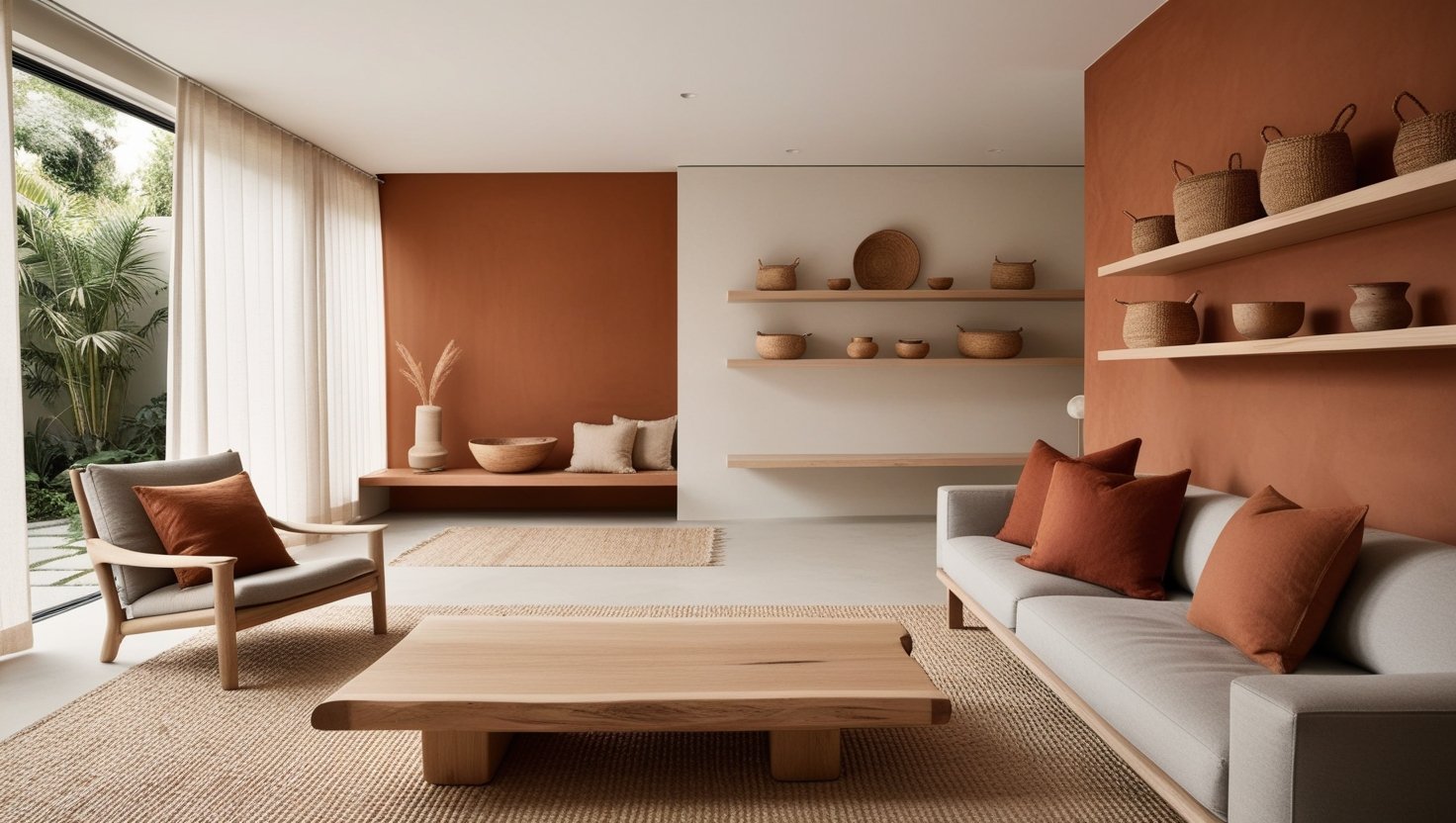
Japandi design demands honesty from its objects. Nothing decorative without purpose. Vinh Long terracotta satisfies this demand completely — the unglazed iron-red surface, the visible throwing lines, the slight asymmetry of a hand-finished rim. These are not flaws. They are precisely the qualities that Wabi-sabi philosophy identifies as beauty. A geometric Vinh Long vase placed against a linen wall or beside raw oak furniture creates a visual dialogue between the industrial and the elemental. Hiep Loi Pottery news documents how leading Vietnamese ceramic studios are already responding to this international demand, translating traditional Vinh Long forms into export-ready Japandi objects.
Earth tones anchor a Japandi palette. Notably, the specific red-orange of Vinh Long clay sits within the 10YR to 5YR Munsell range — warmer than Spanish terracotta, cooler than Mexican burnished ware. That positions it perfectly alongside aged brass, smoked oak, and undyed linen. Furthermore, geometric vases in this clay range from table-scale objects to floor statement pieces, giving interior designers flexible layering options without breaking material coherence.
3. Why Vietnamese Terracotta Belongs Permanently in Your Space
Durability is the first argument. Properly fired Vietnamese terracotta resists thermal shock, handles outdoor humidity, and does not degrade under UV exposure. It outlasts slip-cast commercial ceramics by decades. Sustainability is the second argument. Vinh Long clay extraction operates at artisan scale — no strip mining, no synthetic binders, no kiln emissions beyond wood smoke. The carbon footprint per piece is a fraction of industrial ceramics shipped from northern manufacturing zones.
Above all, cultural weight matters. Each geometric vase produced from Vinh Long terracotta pottery carries an unbroken lineage — Mekong sediment, delta kiln traditions, Vietnamese craft intelligence, and now a contemporary formal vocabulary that speaks to global interiors without abandoning its origin. Collectors and designers who invest in this work are not purchasing décor. They are acquiring a durable, sustainable, and irreplaceable piece of living Vietnamese material culture. Vinh Long Terracotta Pottery does not follow trends. It sets the baseline for what honest, geometrically sophisticated earthenware can achieve.